A practical guide for manufacturers explaining automation line integration, including workflow design, robots, conveyors, PLC control, safety, data requirements and ROI factors.
What Automation Line Integration Means
Automation line integration is the engineering work of connecting machines, robots, conveyors, fixtures, process equipment, sensors, PLC controls, safety devices and operator interfaces into one working production flow. For a manufacturer, the goal is not only to buy individual machines. The goal is to create a reliable line that moves parts through each process step with stable timing, repeatable positioning, safe operation and clear production feedback. A successful line integration project starts from the production problem and then defines the equipment architecture around real factory conditions.
Why a Line Should Be Designed From Workflow First
Many automation projects become difficult because the equipment is selected before the workflow is understood. The first questions should be practical: how does the part enter the line, what process happens first, how is quality checked, where does the operator load or unload, what happens when a station stops, and how much space is available for maintenance. Once the workflow is clear, the integrator can decide whether robots, conveyors, turntables, fixtures, buffers, inspection stations or manual assisted stations are needed. Workflow design reduces the risk of buying equipment that looks strong on paper but does not fit daily production.
The Role of Robots in an Integrated Production Line
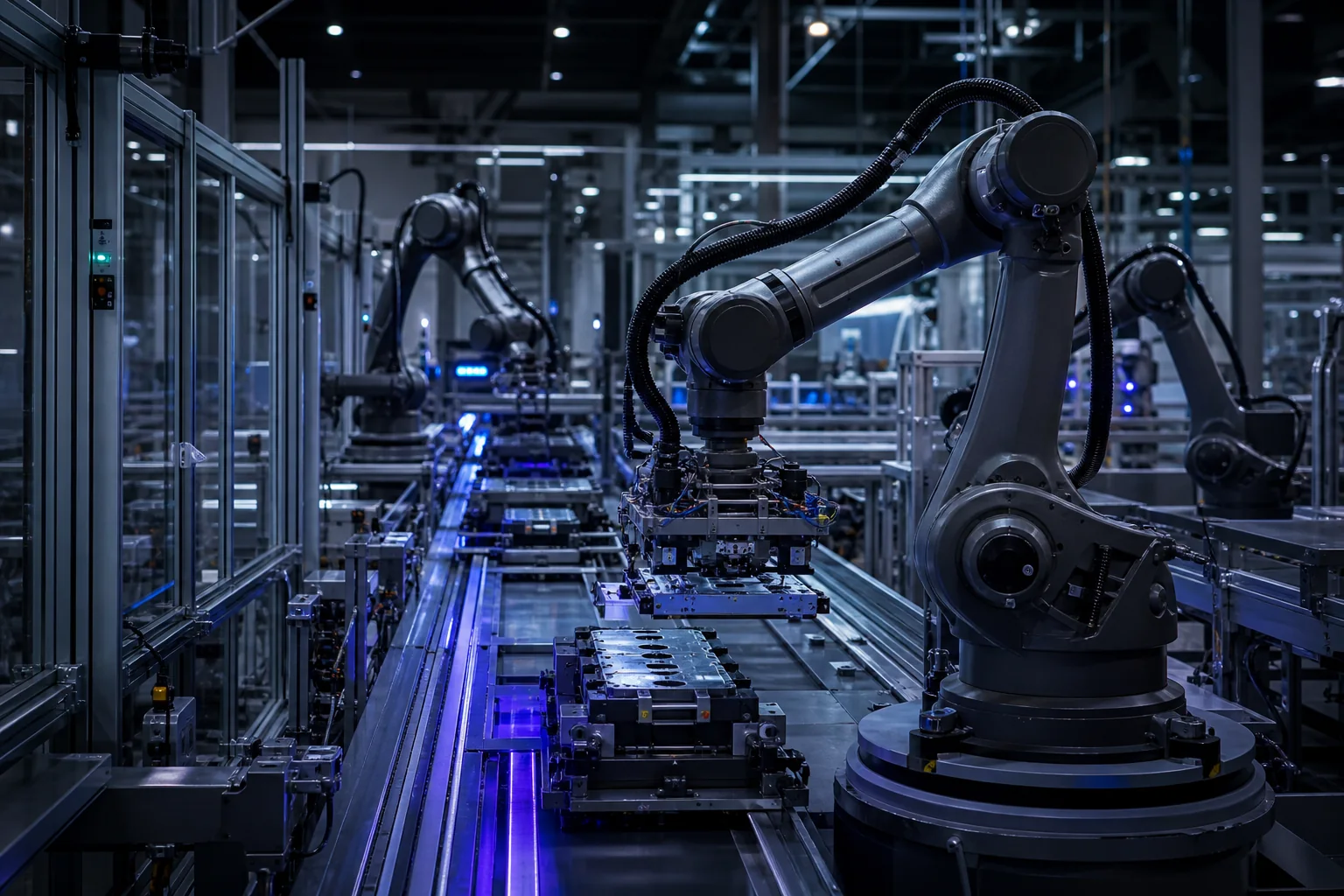
Robots can paint, weld, handle, load, unload, palletize, tend machines or move parts between processes. In an integrated line, the robot is a flexible motion platform, but it must be coordinated with everything around it. Payload and reach are only part of the decision. The robot must match the tooling, part presentation, cycle time, safety zone, floor layout, cable routing and service plan. Kynex Robots evaluates selected robot brands and robot options based on project requirements, then integrates the suitable robot with surrounding equipment instead of treating the robot body as the full solution.
Conveyors and Material Flow Define Production Rhythm
A conveyor or transfer system controls how parts move, queue, stop, index and exit the line. Conveyor design affects cycle time, robot access, operator workload, part spacing, inspection timing and future expansion. A continuous conveyor may be suitable for stable high-volume production. An indexed conveyor may be better when each station needs fixed positioning. A manual loading station may be acceptable when volume is lower or product variety is high. Material flow must also include empty fixture return, rejected part handling, maintenance bypass and safe recovery after faults.
PLC and HMI Control Make the Line Operable
The PLC is the coordinator of the automation line. It manages sensors, conveyors, safety inputs, robot handshakes, process equipment, alarms and station sequence. The HMI gives operators visibility into modes, recipes, alarms, production counts and manual controls. Poor control design can make good hardware difficult to operate. A clear PLC/HMI design should include automatic mode, manual mode, maintenance functions, alarm history, safety reset logic, station status and simple recipe management when product models change. This is especially important for factories where operators and maintenance staff need to run the system every day.
Safety Is a Production Requirement, Not an Add-on
Automation line safety includes emergency stops, safety fencing, doors, interlocks, light curtains, area scanners, safe robot zones, pneumatic safety, electrical protection and operator procedures. Safety should be designed at the same time as the line layout because it affects access, loading, maintenance and cycle time. A line that is difficult to reset after every small fault will lose productivity. A line that leaves unsafe access points creates unacceptable risk. Good safety design balances protection, practicality and maintainability.
Takt Time, Cycle Time and Bottleneck Analysis
Manufacturers often ask how fast an automation line can run, but the better question is where the bottleneck will be. Takt time is driven by customer demand or target output. Cycle time is the actual time required for each station. A painting, welding, loading, curing, inspection or unloading station may become the limiting process. Buffers can reduce small interruptions, but they cannot solve a slow core process. Before final equipment selection, the integrator should compare target hourly output with station cycle time, operator loading time, robot motion time, process time and fault recovery assumptions.
When Full Automation Is Not the Best First Step
Not every factory should automate everything at once. If product design changes frequently, process data is incomplete or production volume is uncertain, phased automation may be more practical. A first phase may automate the bottleneck station while keeping manual loading. A second phase may add conveyors, automatic fixtures or inspection. A third phase may connect upstream and downstream equipment. This approach can reduce capital risk and help the factory learn from real production before expanding. The right integration strategy depends on volume, product stability, budget, floor space and management priorities.
Cost Factors in Automation Line Integration
Automation line cost is driven by scope, complexity and risk. Major cost factors include robot quantity, conveyor length, fixture quantity, station count, electrical cabinet design, PLC/HMI programming, safety hardware, sensors, process equipment, installation, commissioning and training. Product variation, quality inspection needs, existing equipment communication and factory layout constraints can also increase engineering effort. A low equipment price may be misleading if it excludes installation, controls, safety, operator training or production acceptance. A useful quotation should separate required scope from optional modules and clearly state assumptions.
ROI Factors That Factory Buyers Should Track
Return on investment should not be judged only by labor replacement. Automation can improve output stability, quality consistency, coating or welding repeatability, safety, traceability and production planning. ROI depends on current labor cost, defect rate, rework cost, downtime, output demand, shift pattern, energy use, maintenance cost and equipment utilization. A practical ROI review compares the current process with the proposed automated process using real production numbers. Generic payback promises should be avoided because every factory has different products, labor conditions and quality costs.
Data Needed Before Requesting an Automation Line Proposal
Useful proposal data includes product drawings, photos, videos, dimensions, weight, material, process sequence, current output, target output, shift schedule, quality requirements, factory layout, available utilities, existing equipment list, pain points, operator workflow, budget range and expected timeline. If the project includes painting or welding, process-specific data should also be prepared. For painting, coating material, booth condition and color change frequency matter. For welding, weld length, material thickness and fixture concept matter. More accurate input data leads to a more realistic proposal.
How Kynex Robots Supports Automation Line Projects
Kynex Robots works as a robotic system integrator for manufacturers planning robotic painting, robotic welding and automation line projects. The work can include layout planning, robot option evaluation, conveyor integration, fixture planning, process equipment coordination, PLC/HMI control, safety design, installation, commissioning and after-sales support. Kynex Robots should be understood as an integrator that builds the working production system around selected robot options and factory requirements.
FAQ: What Is the Difference Between a Robot Cell and an Automation Line?
A robot cell is usually a single guarded workstation or process area. An automation line connects multiple process steps, machines, conveyors, robots, controls and safety systems into a wider production flow. Many factories start with one cell and later expand into a line.
FAQ: Can Existing Equipment Be Integrated?
Existing equipment can sometimes be integrated if it has usable mechanical condition, safe operation and communication capability. The integrator must check signals, access, safety, cycle time, electrical condition and maintenance risk before deciding whether reuse is practical.
FAQ: Does Kynex Robots Manufacture Robots or Conveyors?
Kynex Robots is a robotic system integrator, not a robot manufacturer. Project delivery is based on selecting suitable robot options and integrating robots with automation components, conveyors, process equipment, PLC controls, safety systems, installation and commissioning.
Automation Line Integration Planning Matrix
| Planning Area | Engineering Question | Data Buyer Should Prepare |
|---|---|---|
| Workflow and process sequence | Which steps must be automated and where is the bottleneck? | Process map, current cycle time, target output, quality checkpoints |
| Robot and tooling | What robot motion, payload, reach and end tooling are required? | Part weight, drawings, handling method, application type, preferred robot options |
| Conveyor and part flow | How will parts move, stop, queue and recover after faults? | Layout, line speed, fixture method, loading and unloading workflow |
| PLC/HMI and communication | How will stations exchange signals and how will operators control the line? | Existing PLC brand, equipment list, alarm needs, recipe requirements |
| Safety and access | How will people load, maintain and recover the line safely? | Operator positions, maintenance access, safety standard, reset workflow |
| ROI and project scope | Which value drivers justify automation and which modules can be phased? | Labor cost, defect rate, rework cost, demand forecast, budget range |