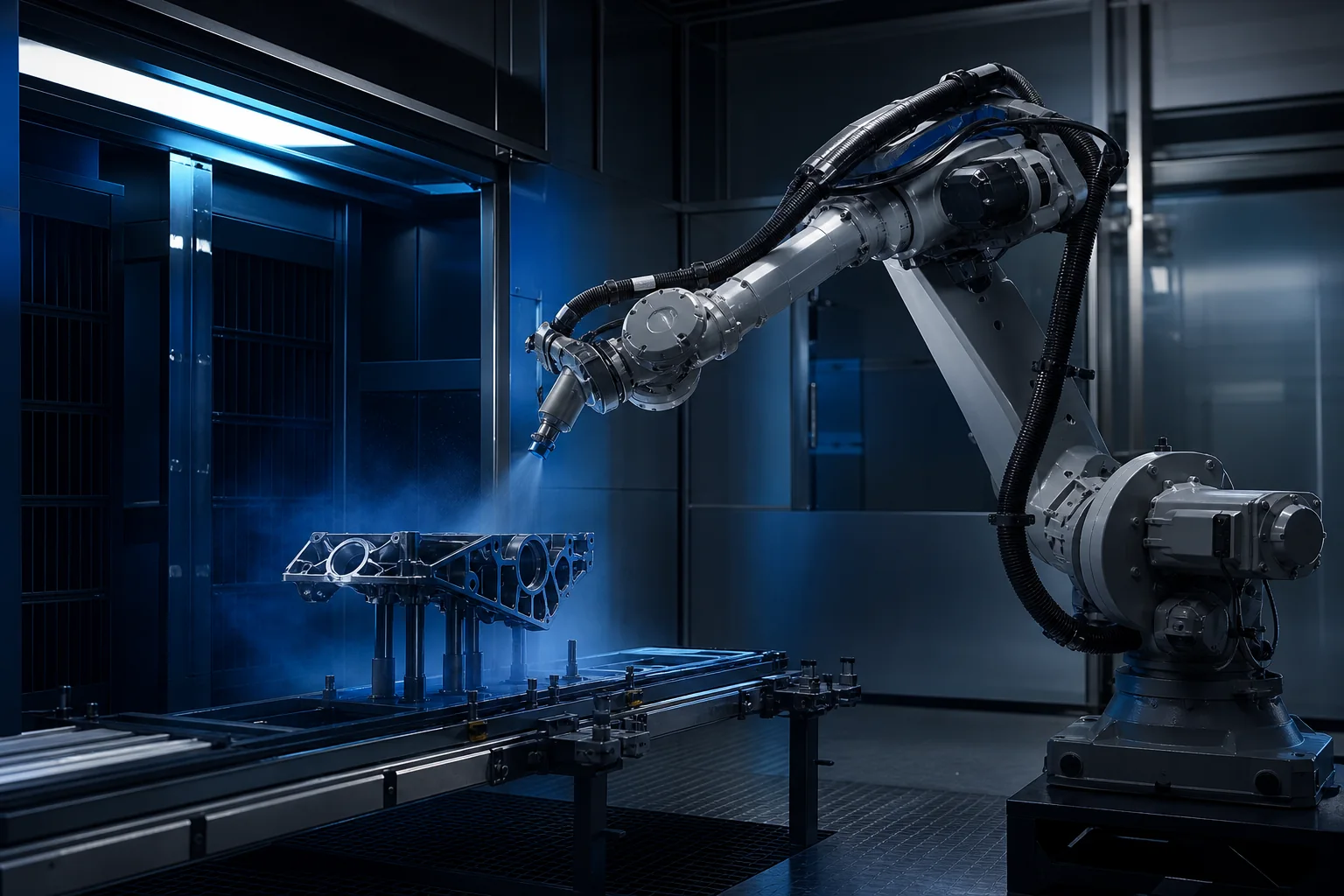
A practical checklist for manufacturers preparing robotic painting line projects, covering part data, coating process, spray booth, conveyor, fixtures, output targets and integration scope.
Start With Real Product Data
A reliable robotic painting proposal starts with part photos, drawings, material, dimensions, weight, surface condition and product variation. Robot reach, fixture design, spray path planning and booth layout all depend on the real product family rather than a generic robot model.
Define the Coating Process Before Robot Selection
The coating type, spray gun, pump, color change frequency, film thickness target, drying or curing requirement and quality standard should be clarified before selecting a robot. The robot is one part of a complete painting system, not the full process by itself.
Check Spray Booth and Airflow Requirements
Spray booth size, airflow direction, overspray control, access doors, maintenance space and safety interlocks must be evaluated together. A painting robot needs enough working envelope while the booth still supports stable coating quality and safe operation.
Plan Conveyor and Part Positioning Early
Conveyor speed, hanging method, indexing accuracy and loading workflow directly affect spray path repeatability. If parts do not arrive in a stable position, the robot cannot deliver consistent coating results even with a strong robot platform.
Prepare Output and Shift Requirements
Factories should define hourly capacity, working shifts, batch size, color changes, rework rate and current manual painting bottlenecks. These inputs help decide whether the project needs a single robot cell, multiple robots, a conveyorized line or staged automation.
Include Controls and Safety in the Scope
A complete robotic painting line includes PLC/HMI, electrical cabinets, robot communication, booth interlocks, conveyor control, emergency stops, safety devices and commissioning. These integration details determine daily uptime and maintainability.
What to Send for a Faster Quotation
Useful quotation data includes product drawings, photos or videos, coating process notes, existing booth or line layout, target output, preferred robot options, utilities, budget range and expected project timeline.
FAQ: Does Kynex Robots Manufacture Painting Robots?
No. Kynex Robots is a robotic system integrator. The project approach is to evaluate selected robot brands and integrate a suitable robot with spray equipment, booth, conveyor, fixtures, controls, safety systems, installation and commissioning.
FAQ: When Is Robotic Painting a Good Fit?
Robotic painting is usually a strong fit when the product family is repeatable, coating quality needs to be more stable, manual spraying creates bottlenecks or safety exposure is a concern. The best first step is to review process data before final equipment selection.